

Ms. Andrea A. Jacobs
Andrea A. Jacobs is the AI National Focal Point for Antigua and Barbuda, representing the country in international forums on artificial intelligence, digital governance, and emerging technologies.
Read more about Ms. Jacobs
An attorney by profession, Jacobs brings legal, policy, and technical expertise to advancing equitable access to AI and inclusive governance. Her work focuses on ensuring that small island developing states and the broader Global South are meaningfully represented in global decision-making.
She contributes to multilateral efforts to democratize AI resources and promote ethical, human-centered innovation while also supporting digital transformation and resilience across the Caribbean.
Jacobs holds an LL.B. from the University of Wolverhampton; she also holds two LL.M. degrees: one in Banking and Finance Law from Queen Mary University and another in Environmental and Energy Law from Georgetown University Law Center in Washington, D.C
Dr. Craig Ramlal
Dr. Craig Ramlal is the Executive Director of the Artificial Intelligence Innovation Centre, at the UWI and the Head of the Control Systems Group in the Department of Electrical and Computer Engineering, Faculty of Engineering, at the University of the West Indies, St. Augustine.
Read more about Dr. Ramlal
In 2023, the United Nations recognized him as a preeminent AI leader, appointing him to the United Nations Secretary-General’s High-Level Advisory Body on Artificial Intelligence. The body’s recommendations on governing AI for humanity formed Objective 5 of the Global Digital Compact, which was adopted by member states in September 2024 during the 79th UN General Assembly, and some implemented in August 2025 during the 80th UN General Assembly.
He currently serves as the Chair of the Caribbean Telecommunications Union’s (CTU) Caribbean Taskforce on AI, charged with writing harmonized AI policies, recommendations and guidelines for the Caribbean nations, a member of the CARICOM’s Security Strategy Steering Committee, as an advisor to the Caribbean Examinations Council (CXC) on regional AI education policy matters, as an expert on the UNDP+CARICOM’s joint regional AI programme 2026-2030, as an expert on ECLAC’s National AI Agenda’s for SIDS and as a member of the eLAC’s Caribbean AI working group toward fulfilling the eLAC2026 Agenda.
Previously, he lent his expertise to the development Singapore’s National AI Research and Development Plan, served on the Caribbean Development Bank’s technical subcommittee on IRC/RDA, collaborated with CARICOM IMPACS on the regionally adopted Autonomous Weapon Systems Declaration, served as a lead on the Institute of Electrical and Electronics Engineers (IEEE) Global Initiative on the Ethics of Autonomous and Intelligent Systems 2.0, acted as a regional coordinator for open data strategy development across Caribbean nations in partnership with the International Development Research Centre (IDRC) and NASA. He developed and authored the founding vision, operational modalities, and strategic focus of the newly formed UWI’s Institute for Intelligent Systems, Governance and Human-Centred Technology (INSIGHT), served on the AI subcommittee for writing the adopted AI policy for all UWI’s campuses and was also an invited peer reviewer for UNESCO’s AI Policy Roadmap for the Caribbean. Finally, he led the development of several UWI postgraduate degrees at the UWI, including the Postgraduate Certificate (PGCert) in AI, Postgraduate Diploma (PGDip) in AI, Master of Applied Science (MASc) in AI, Master of Philosophy (MPhil) in AI and Doctor of Philosophy (PhD) in AI.
Through his centre, he has established collaborative partnerships that have led to advancements across multiple fields, including the development of advanced robotics with Rutgers University; deep learning-based auto-diagnostics for asset management with Elering AS and Tallinn University of Technology; blockchain-based systems for water management with the Global Water Partnership-Caribbean; and
ventilation systems developed in collaboration with the Trinidad and Tobago Ministry of Health, GoRTT and researchers from the University of Florida to help mitigate the spread of COVID-19. These initiatives have resulted in several implemented systems, as well as numerous technical reports, peer-reviewed journal articles, and conference papers.
Dr. Ramlal is an editor and reviewer for several journals. He earned his BSc, MASc, and PhD in Electrical and Computer Engineering through split-site by the University of the West Indies, Trinidad and Tobago, and King Fahd University of Petroleum and Minerals, Saudi Arabia. His research focuses on control systems, artificial intelligence, and game-theoretic systems.
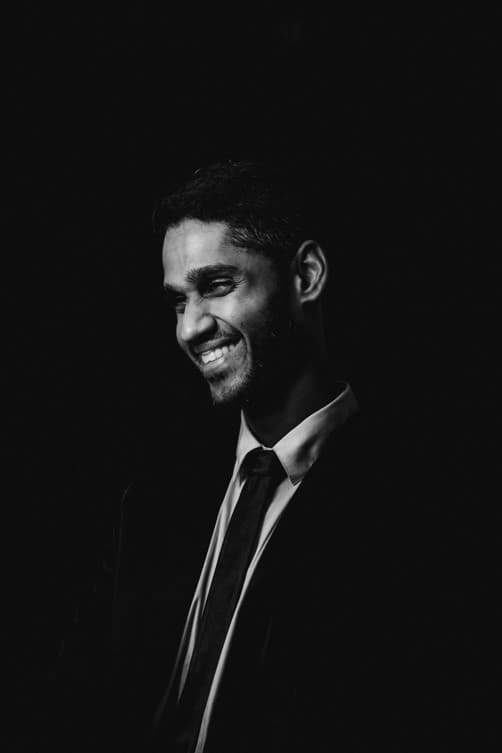
Dr. Craig Ramlal
Dr. Craig Ramlal is the Executive Director of the Artificial Intelligence Innovation Centre, at the UWI and the Head of the Control Systems Group in the Department of Electrical and Computer Engineering, Faculty of Engineering, at the University of the West Indies, St. Augustine.
Read more about Dr. Ramlal
In 2023, the United Nations recognized him as a preeminent AI leader, appointing him to the United Nations Secretary-General’s High-Level Advisory Body on Artificial Intelligence. The body’s recommendations on governing AI for humanity formed Objective 5 of the Global Digital Compact, which was adopted by member states in September 2024 during the 79th UN General Assembly, and some implemented in August 2025 during the 80th UN General Assembly.
He currently serves as the Chair of the Caribbean Telecommunications Union’s (CTU) Caribbean Taskforce on AI, charged with writing harmonized AI policies, recommendations and guidelines for the Caribbean nations, a member of the CARICOM’s Security Strategy Steering Committee, as an advisor to the Caribbean Examinations Council (CXC) on regional AI education policy matters, as an expert on the UNDP+CARICOM’s joint regional AI programme 2026-2030, as an expert on ECLAC’s National AI Agenda’s for SIDS and as a member of the eLAC’s Caribbean AI working group toward fulfilling the eLAC2026 Agenda.
Previously, he lent his expertise to the development Singapore’s National AI Research and Development Plan, served on the Caribbean Development Bank’s technical subcommittee on IRC/RDA, collaborated with CARICOM IMPACS on the regionally adopted Autonomous Weapon Systems Declaration, served as a lead on the Institute of Electrical and Electronics Engineers (IEEE) Global Initiative on the Ethics of Autonomous and Intelligent Systems 2.0, acted as a regional coordinator for open data strategy development across Caribbean nations in partnership with the International Development Research Centre (IDRC) and NASA. He developed and authored the founding vision, operational modalities, and strategic focus of the newly formed UWI’s Institute for Intelligent Systems, Governance and Human-Centred Technology (INSIGHT), served on the AI subcommittee for writing the adopted AI policy for all UWI’s campuses and was also an invited peer reviewer for UNESCO’s AI Policy Roadmap for the Caribbean. Finally, he led the development of several UWI postgraduate degrees at the UWI, including the Postgraduate Certificate (PGCert) in AI, Postgraduate Diploma (PGDip) in AI, Master of Applied Science (MASc) in AI, Master of Philosophy (MPhil) in AI and Doctor of Philosophy (PhD) in AI.
Through his centre, he has established collaborative partnerships that have led to advancements across multiple fields, including the development of advanced robotics with Rutgers University; deep learning-based auto-diagnostics for asset management with Elering AS and Tallinn University of Technology; blockchain-based systems for water management with the Global Water Partnership-Caribbean; and
ventilation systems developed in collaboration with the Trinidad and Tobago Ministry of Health, GoRTT and researchers from the University of Florida to help mitigate the spread of COVID-19. These initiatives have resulted in several implemented systems, as well as numerous technical reports, peer-reviewed journal articles, and conference papers.
Dr. Ramlal is an editor and reviewer for several journals. He earned his BSc, MASc, and PhD in Electrical and Computer Engineering through split-site by the University of the West Indies, Trinidad and Tobago, and King Fahd University of Petroleum and Minerals, Saudi Arabia. His research focuses on control systems, artificial intelligence, and game-theoretic systems.